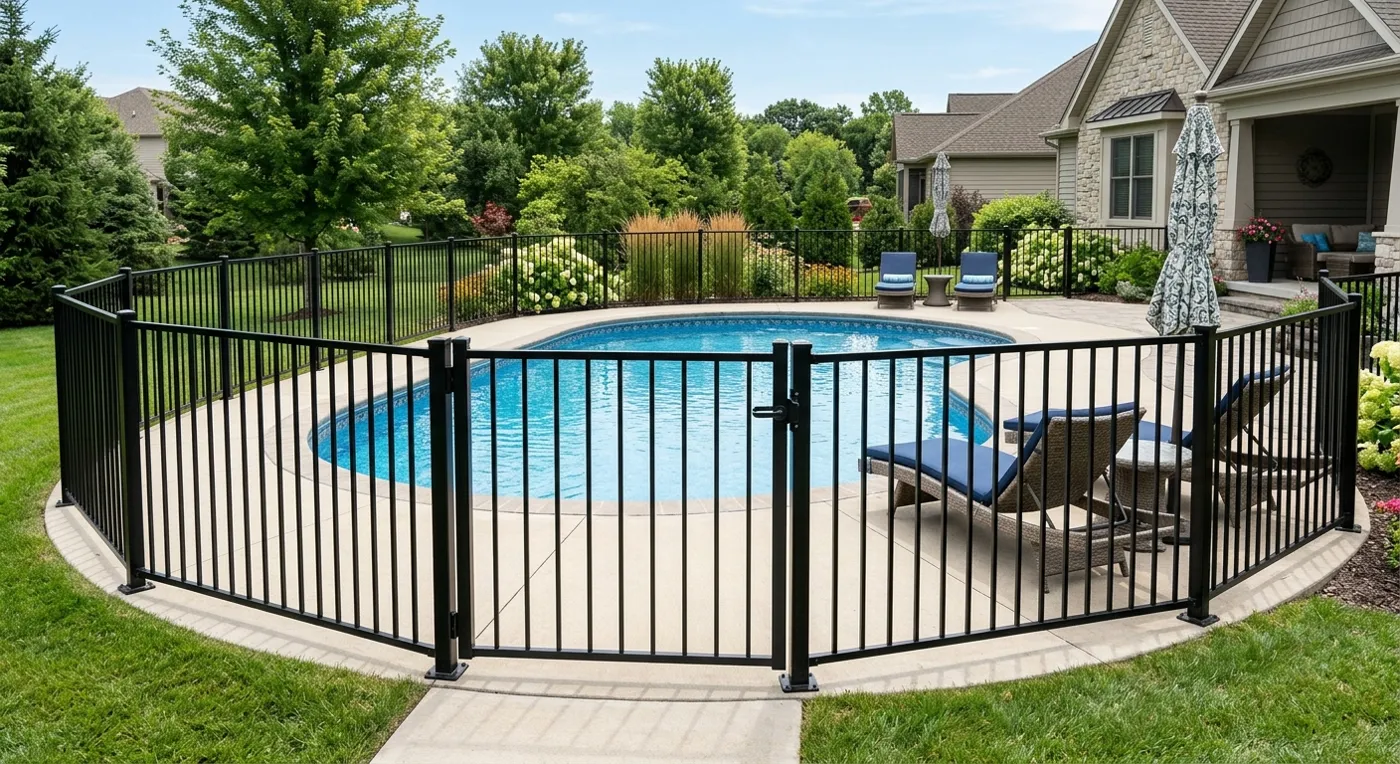
We build pool barriers for in-ground and above-ground pools in New Orleans and nearby parishes. Plan the fence together with the pool, since the barrier is inspected before the pool can be used.
A pool fence is a safety barrier, and it is inspected as one. Louisiana building departments apply the International Swimming Pool and Spa Code, which calls for a barrier at least 48 inches high, no more than 2 inches of space under it, and openings too small for a 4-inch ball to pass. Gates must open away from the pool, close by themselves and latch by themselves. Your permit office confirms the exact requirements for your pool, and we build to what they give you.
Material matters more here than in most places. Pool water, humid air and afternoon rain keep a pool fence wet for much of the year. Powder-coated aluminum is the common choice because it does not rust and it leaves the view open. Vinyl works where you want the pool screened from a neighbor. Wood can be used, but it needs sealing and it will not last as long beside a pool. In New Orleans a front yard fence must be open, which matters when a pool sits in a side yard that faces a street.
Small city lots make layout the hard part. The barrier often ties into the house, a shed or a raised deck, and each of those joins has to meet the same rules as the fence. Nothing climbable, such as an AC unit or a planter, should sit against the outside. We mark the gate positions with you first, because the pool builder also needs a way in for equipment before the last section goes up.
Pool fences in New Orleans: common questions
How tall does a pool fence have to be?
The pool code used in Louisiana calls for at least 48 inches, measured on the side facing away from the pool. Your city or parish permit office confirms the figure for your pool, and some homeowner associations ask for more.
Can my existing yard fence count as the pool barrier?
Sometimes. It has to meet the barrier rules on height, gaps and gates all the way around. Older fences most often fail on the gate, which must close and latch on its own, or on a gap at the bottom where the ground has sunk.
When should the pool fence go in?
Plan it with the pool. Part of it is usually left open so the pool builder can bring in machines, then closed when digging is finished. The barrier has to pass inspection before the pool is approved for use.
How it works
- Free estimate: Call, text or book online. We visit, measure and talk through options.
- Written quote: Clear pricing with material choices side by side.
- Permits & planning: We check local rules and help with permits before we dig.
- Install & clean-up: Our crew installs, cleans up and walks the finished fence with you.